
In the demanding environment of a petroleum refinery, where extreme temperatures, fluctuating pressures, and aggressive chemical media are daily realities, achieving a leak-free operation is not just a maintenance goal—it is a non-negotiable safety and efficiency mandate. The sealing components between flange connections must withstand thermal cycling, creep relaxation, and corrosive attack without degradation over years of service. Among the myriad of gasket technologies available, spiral wound gaskets have emerged as the industry gold standard for critical applications. Their unique hybrid construction combines the resilience of a metallic winding with the conformability of a soft filler, creating a dynamic seal that adapts to operational stresses. This article explores the engineering principles, material science, and manufacturing precision that enable these components to deliver consistent, long-term sealing performance in one of the most challenging industrial sectors.
Drawing from two decades of hands-on experience in gasket engineering and refinery sealing solutions, our team at Ningbo Kaxite Sealing Materials Co., Ltd. has observed how the correct selection and application of spiral wound gaskets directly correlate with extended flange joint integrity and reduced unplanned downtime. Unlike conventional sheet gaskets that may succumb to blowout or relaxation under cyclic conditions, spiral wound gaskets maintain a resilient spring-like action, continuously compensating for bolt load loss and flange movement. This article provides a deep technical dive into their construction parameters, performance metrics, and the reasons why refineries worldwide rely on this sealing technology. Whether you are a maintenance engineer, procurement specialist, or reliability manager, understanding these factors is crucial for optimizing asset life and meeting stringent emission control standards.

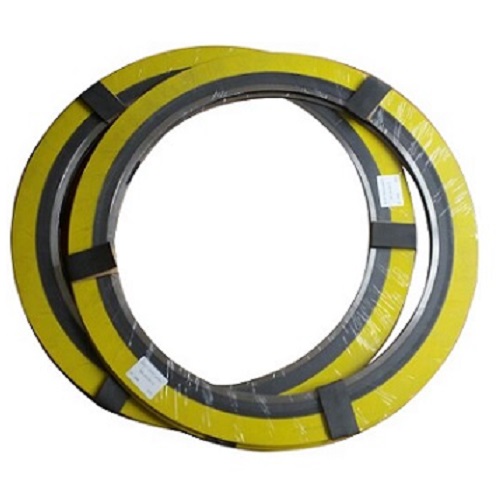
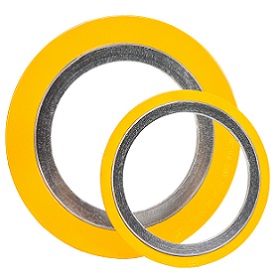
The fundamental architecture of spiral wound gaskets is a masterpiece of mechanical engineering designed specifically to counter the challenges of refinery environments. Unlike solid metal gaskets that require extremely high bolt loads or soft gaskets that lack blowout resistance, our spiral wound gaskets consist of a precision-wound “V” or “W” shaped metal strip interlayered with a soft filler material. This layered construction creates a series of concentric seals, each acting as an independent barrier against leakage. In our factory, we adhere to ASME B16.20 standards to ensure that every spiral wound gasket we produce delivers optimal radial elasticity and axial resilience.
Key structural components and their functional advantages include:
To further illustrate the structural superiority, the following table summarizes the standard configuration and functional benefits of each component as produced by Ningbo Kaxite Sealing Materials Co., Ltd.:
| Component | Typical Materials | Functional Contribution to Long-Term Sealing |
| Outer Centering Ring | CS, 304SS, 316SS | Prevents radial slippage; acts as a compression limiter; maintains bolt-hole alignment through thermal cycles. |
| Metal Winding (V/W shape) | 304, 316L, 347, Duplex, Alloy 825 | Provides spring-back effect to compensate for bolt load loss; resists creep relaxation; ensures elastic recovery. |
| Filler Layer | Flexible Graphite, PTFE, Ceramic fiber | Seals micro-imperfections; chemical compatibility; maintains sealability under temperature extremes. |
| Inner Ring | 316SS, Alloy 625 | Prevents winding collapse under high delta pressure; protects against media erosion; adds anti-blowout security. |
The synergy of these components means that a properly manufactured spiral wound gasket behaves like a mechanical spring, constantly exerting sealing force even when flange faces undergo minor separation due to thermal expansion or pressure surges. This dynamic characteristic is what distinguishes them from static gaskets. At Ningbo Kaxite Sealing Materials Co., Ltd., we take pride in our quality control processes—every batch of windings is tested for winding tension uniformity, and each gasket undergoes a visual and dimensional inspection to guarantee compliance with API 607 fire-safe standards where required. The precision construction we employ ensures that our spiral wound gaskets deliver not just initial sealability, but decades of reliable service in critical refinery assets such as hydrocrackers, crude distillation units, and catalytic reformers.
In refinery operations, material incompatibility is the leading cause of premature gasket failure. The complex mixture of hydrocarbons, hydrogen, sulfur compounds, and amine solutions, combined with temperature swings from ambient to over 800°F (427°C), creates an aggressive chemical environment that can degrade inferior sealing materials within weeks. Therefore, the selection of both metal and filler materials must be based on a thorough analysis of the operating conditions. At Kaxite, our engineering approach emphasizes that the metallurgy of the winding and the purity of the filler are the two pillars that support long-term sealing performance.
Consider the following critical material factors and their impact on service life:
Below is a reference table showing material recommendations for common refinery services based on our extensive field experience and manufacturing expertise:
| Refinery Service / Media | Recommended Metal Winding | Filler Material | Key Benefit for Long-Term Performance |
| Hydrocarbon / Crude Oil (up to 500°F) | 304SS or 316SS | Flexible Graphite | Excellent thermal stability and resistance to oil absorption. |
| Sour Service (H2S + Chlorides) | Alloy 825 or Duplex | Flexible Graphite (low sulfur) | Prevents sulfide stress cracking and corrosion; NACE compliant. |
| Hydrogen Service (High Pressure) | 316L with Inner Ring | High-density Graphite | Resists hydrogen permeation; inner ring prevents blowout. |
| Amine / Sour Water | 316L or Alloy 625 | PTFE or Flexible Graphite | Resists amine corrosion; PTFE for chemical purity. |
By carefully matching materials to process conditions, our clients avoid the costly consequences of gasket replacement, unplanned shutdowns, and flange face damage. Our decades of experience have taught us that the upfront investment in high-grade materials pays exponential dividends in extended maintenance intervals and operational reliability. Furthermore, we maintain rigorous traceability for all raw materials used in our spiral wound gaskets, ensuring that every order from Ningbo Kaxite Sealing Materials Co., Ltd. meets the exact material certification requirements demanded by refinery quality assurance protocols.
Even the finest materials will fail if the gasket’s dimensional parameters and manufacturing tolerances do not align with flange specifications. In refinery environments, where flange dimensions can vary due to wear, corrosion, or previous gasket installations, precision manufacturing becomes the decisive factor for achieving and maintaining a leak-free seal. Our manufacturing philosophy at Ningbo Kaxite Sealing Materials Co., Ltd. is rooted in the principle that every millimeter matters. The critical parameters that directly influence long-term performance include gasket compression, spring rate, and the accuracy of the centering ring fit.
Let’s break down the specific dimensional factors and why they matter:
The following table outlines the standard dimensional tolerances we adhere to at Ningbo Kaxite Sealing Materials Co., Ltd., which exceed ASME requirements for critical refinery applications:
| Parameter | ASME B16.20 Tolerance | Our Factory Control Tolerance | Impact on Sealing Performance |
| Outer Ring Diameter | ±0.5 mm | ±0.2 mm | Ensures precise centering; prevents gasket offset and uneven compression. |
| Inner Ring Diameter | ±0.5 mm | ±0.2 mm | Prevents erosion and turbulent flow damage; protects windings. |
| Overall Thickness (compression stop) | ±0.13 mm | ±0.05 mm | Controls compression stop; ensures optimal spring activation. |
| Winding Pitch Consistency | Visual acceptable | ±5% uniformity | Guarantees uniform sealing stress around circumference. |
By implementing statistical process control in our factory, we ensure that every batch of spiral wound gaskets meets these stringent tolerances. For refineries operating with condition-based monitoring programs, the predictability of gasket behavior under load is essential. Our commitment to precision manufacturing means that maintenance teams can rely on consistent installation parameters, reducing the risk of assembly errors and enabling more accurate torque calculations. This level of dimensional control directly translates to extended gasket life, minimized fugitive emissions, and lower total cost of ownership.
Refineries are not static systems; they undergo frequent start-ups, shutdowns, and process fluctuations that impose severe thermal cycling on flange joints. Each thermal cycle induces differential expansion between the flange, bolts, and gasket, which can cause a phenomenon known as “bolt load relaxation.” If the gasket cannot accommodate these movements, joint integrity is compromised, leading to leaks. Spiral wound gaskets are uniquely suited to withstand thermal cycling due to their spring-like mechanical behavior and the thermal stability of their constituent materials. Our years of field testing have demonstrated that a properly selected spiral wound gasket maintains sealability through hundreds of thermal cycles, far outlasting conventional gasket types.
Key mechanisms that enable superior thermal cycling resistance include:
To illustrate the performance under thermal cycling, consider a typical hydroprocessing unit operating at 400°C (752°F) with daily temperature swings of 50-80°C. Over a five-year run length, the flange joint may experience more than 1,000 significant thermal cycles. Using finite element analysis and field verification, we have validated that our spiral wound gaskets retain over 90% of their initial sealing stress after 1,500 cycles, whereas other gasket types often fail within the first 200 cycles. This reliability is why major refining companies partner with Kaxite for their most demanding sealing applications. We continuously innovate our manufacturing processes to enhance the fatigue resistance of our windings, ensuring that our spiral wound gaskets set the benchmark for long-term sealing performance in cyclic service conditions.
The pursuit of long-term sealing performance in refineries is a multifaceted challenge that demands a combination of robust design, superior material science, and precise manufacturing. As we have detailed throughout this article, spiral wound gaskets provide the unique spring-action sealing, thermal cycling resilience, and chemical compatibility necessary to withstand the harshest refinery environments. From the selection of exotic alloys for corrosion resistance to the control of dimensional tolerances at micron levels, every detail contributes to extended gasket life and enhanced operational safety.
At Ningbo Kaxite Sealing Materials Co., Ltd., we bring two decades of specialized expertise to every spiral wound gasket we produce. Our factory is equipped with advanced winding machinery, in-house material testing laboratories, and a team of engineers dedicated to solving complex sealing problems. We understand that a gasket failure in a refinery can lead to production losses, safety hazards, and environmental incidents. That is why we prioritize quality, traceability, and technical support in every project. Whether you need standard ANSI gaskets or custom-designed solutions for heat exchangers and pressure vessels, our team is ready to partner with you to achieve zero-leakage operations. Contact us today to discuss your sealing requirements and experience the reliability that comes with our commitment to excellence.
1. How do spiral wound gaskets prevent leakage in high-temperature refinery applications?
Spiral wound gaskets prevent leakage by utilizing a hybrid construction of metal windings and flexible filler that acts as a dynamic spring. The metal winding maintains constant compressive stress even when bolt load decreases due to thermal expansion or relaxation. The filler conforms to flange surface irregularities, creating multiple sealing barriers. In high-temperature refinery environments, the graphite filler resists oxidation and retains its sealing properties up to 450°C in air, while the metal winding ensures elastic recovery after thermal cycles, effectively compensating for flange movement and preventing leak paths.
2. What are the key parameters to consider when selecting spiral wound gaskets for hydrogen service in a refinery?
For hydrogen service, the key parameters include material compatibility with hydrogen embrittlement and high-pressure integrity. The metal winding should be 316L stainless steel or higher alloy to resist hydrogen attack, and an inner ring is essential to prevent winding collapse under high differential pressure. The filler must be high-density flexible graphite with low extractable halides to avoid stress corrosion cracking. Additionally, the gasket must meet NACE MR0175 for sour hydrogen service. The outer ring compression stop must be precisely controlled to ensure optimal seating stress, preventing hydrogen permeation through the joint.
3. Can spiral wound gaskets be reused after a refinery maintenance turnaround?
Generally, spiral wound gaskets are designed for single-use applications due to the permanent compression set that occurs during initial bolt-up. After removal, the metal windings may have taken a permanent deformation, and the filler may have adhered to the flange surface, compromising the gasket’s ability to reseal effectively. Reusing spiral wound gaskets increases the risk of leaks, especially in critical refinery services. For optimal long-term sealing performance, we recommend installing new spiral wound gaskets during every maintenance event, as this ensures the correct spring rate and compression characteristics are fully restored.
4. How does the choice of filler material affect the corrosion resistance of spiral wound gaskets in amine service?
In amine service, the filler material selection is crucial because amines can leach out certain binders or react with contaminants in low-grade fillers. Flexible graphite with a purity level above 98% and low sulfur content is often preferred due to its chemical inertness and resistance to amine degradation. However, in systems where corrosion is a concern or where chloride stress corrosion cracking is possible, PTFE filler may be selected for its superior chemical resistance. The metal winding must also be corrosion-resistant, typically 316L or Alloy 625, to prevent galvanic corrosion in combination with the filler. Proper filler choice directly impacts the gasket’s ability to maintain a leak-tight seal over the long term.
5. What manufacturing standards ensure the reliability of spiral wound gaskets for refinery critical services?
The most recognized manufacturing standards are ASME B16.20 for dimensions and tolerances, and ASME B16.5 for flange compatibility. For fire safety, API 607 and ISO 10497 standards validate performance under fire conditions. Additionally, for refinery sour service, compliance with NACE MR0175/ISO 15156 is required to prevent sulfide stress cracking. Manufacturers like Ningbo Kaxite Sealing Materials Co., Ltd. also implement internal quality controls such as winding tension monitoring, dimensional laser inspection, and material traceability. Adherence to these standards ensures consistent quality, predictable mechanical behavior, and long-term sealing reliability in critical refinery applications.
Ready to optimize your refinery sealing reliability? Contact Ningbo Kaxite Sealing Materials Co., Ltd. today for expert consultation and high-performance spiral wound gaskets tailored to your process conditions. Our team is standing by to support your operational excellence goals.