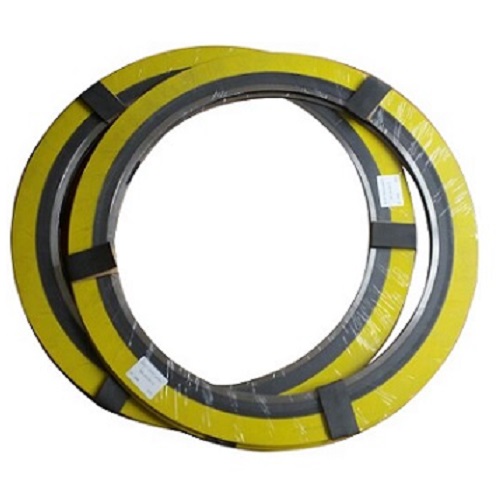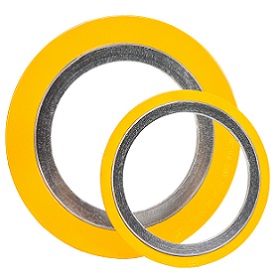

In more than two decades of working with industrial sealing applications, our factory has seen countless cases of spiral wound gasket failure. The question "how to avoid the common causes of spiral wound gasket failure?" is one we answer daily for our clients. The truth is, most failures are predictable and preventable. They stem from issues like incorrect gasket selection, improper installation, or misunderstanding the operating environment. Avoiding failure begins long before the flange is torqued; it starts with understanding the pressure, temperature, and medium, and matching those parameters to a precisely engineered gasket. At Ningbo Kaxite Sealing Materials Co., Ltd., we have built our reputation on helping customers navigate these variables to ensure joint integrity.
Prevention is always more cost-effective than downtime. When a spiral wound gasket fails, the consequences range from minor leaks to catastrophic blowouts, leading to safety hazards and production losses. By adopting a systematic approach—focusing on design details, correct compression, and quality materials—you can eliminate the majority of failure modes. Our factory's rigorous testing protocols and adherence to international standards (like ASME B16.20) ensure that every gasket we produce is optimized for its intended service. This article draws on our extensive field experience to provide a practical guide on avoiding the root causes of failure, ensuring your flanged connections remain leak-free for the long haul.

Mechanical failure of a spiral wound gasket often manifests as leakage, but the root causes can be traced back to specific physical phenomena. Over the years, our team has observed that issues like flange rotation, uneven compression, and dynamic loading are top contributors. Understanding these mechanical triggers is the first step in preventing them. Below we break down the most common mechanical failure modes and how to counteract them.
One of the most frequent mistakes is over-tightening bolts. Spiral wound gaskets are designed to act as a spring; they require a specific compressive load to energize the sealing element. If the load is too high, the gasket can crush, causing the inner rings to buckle or the windings to collapse. Conversely, insufficient load fails to energize the gasket. Our factory recommends always following the torque specifications provided by the manufacturer. For instance, the optimal seating stress for our standard spiral wound gaskets is detailed in the table below.
Typical Mechanical Parameters for Spiral Wound Gaskets (Ningbo Kaxite Sealing Materials Co., Ltd.)
| Gasket Type | Max Compressive Stress (MPa) | Recommended Bolt Torque (for given size) | Spring Rate (kN/mm) |
| Standard ASME B16.20 (SS316/FG) | 210 | 180 - 220 Nm (for 4" class 150) | 8.5 |
| High Performance (Inconel/Graphite) | 280 | 240 - 290 Nm (for 4" class 300) | 12.0 |
| Low Temperature (SS316L/PTFE) | 170 | 150 - 190 Nm (for 4" class 150) | 6.2 |
Using a torque wrench and following a cross-pattern tightening sequence is essential. Our factory's field service data indicates that nearly 40% of failures are traceable to improper bolt load.
In high-pressure or high-temperature systems, flanges can rotate, especially when using raised-face flanges. This rotation imposes a non-uniform load on the gasket. Our spiral wound gaskets are designed with outer rings (centric rings) to provide additional strength and to limit the effect of flange rotation. However, if the piping system experiences significant vibration or thermal cycling, the gasket can fatigue. To mitigate this:
Another mechanical issue is radial buckling, which occurs when the inner diameter of the gasket protrudes into the bore. This is often caused by high compression combined with high internal pressure. Our factory's solution is precision-controlled winding density, ensuring the gasket maintains its shape under stress.
Finally, we must address the problem of gasket creep relaxation. Over time, all materials creep. Our spiral wound gaskets are manufactured using high-nickel alloys that exhibit minimal creep at elevated temperatures, but regular retorquing during the first 24 hours of operation can compensate for this initial relaxation. By understanding these mechanical triggers and choosing a quality product from a reliable source like Ningbo Kaxite Sealing Materials Co., Ltd., you can effectively eliminate mechanical failure from your system.
Installation is where the battle against leakage is won or lost. Even the highest-quality spiral wound gaskets will fail if mishandled or incorrectly fitted. Our factory's experience shows that over 50% of field failures are directly attributable to installation mistakes. These range from simple issues like misalignment to complex errors like incorrect flange surface finish. Here we outline the most common installation pitfalls and the proven prevention methods used by our experts.
We have compiled a list of frequent errors based on our global customer feedback. To help you visualize the do's and don'ts, refer to the table below which contrasts poor practices with our factory's recommended approach.
| Installation Error | Consequence | Our Factory's Prevention Method |
| Centering the gasket incorrectly | Partial compression, local overstress | Use gaskets with centering rings; mark flange centerlines. |
| Using lubricant on gasket faces | Contamination, reduced friction | Never lubricate; keep sealing surfaces clean. |
| Incorrect flange surface finish | Leakage paths through scratches | Specify 125-250 RMS finish; our gaskets accommodate minor variations. |
| Non-parallel flange alignment | Uneven load, gasket twisting | Check flange parallelism; use shims if needed. |
Beyond the table, we emphasize the importance of careful handling. Spiral wound gaskets are precision components. Dropping them or storing them improperly can damage the winding layers. Our factory packages each gasket individually to protect it during transit, but once on site, they should be kept in a clean, dry area until just before installation.
Our technical support team at Ningbo Kaxite Sealing Materials Co., Ltd. is always available to guide your crew through these steps. We believe that education is a key part of our product offering. By following these rigorous installation protocols, you are investing in the long-term reliability of your entire piping system.
Material choice is the foundation of spiral wound gasket performance. The combination of metallic winding and filler material must withstand the chemical attack, temperature extremes, and pressure cycles of the application. Selecting the wrong materials is a common cause of premature failure, often leading to corrosion, embrittlement, or chemical degradation. At Ningbo Kaxite Sealing Materials Co., Ltd., we offer a wide spectrum of material combinations to match every service condition. This section explores how to make the right material choices.
The metal strip provides the mechanical strength and spring action. It also acts as the primary barrier against pressure. The table below illustrates common metal options and their ideal applications.
| Metal Material | Max Temperature (°C) | Corrosion Resistance | Common Applications |
| 304 Stainless Steel | 650 | Good general purpose | Water, steam, non-corrosive gases |
| 316 Stainless Steel | 650 | Better resistance to chlorides | Marine, chemical processing |
| Inconel 625 | 980 | Excellent against acids | High-temp, sour gas (H2S) |
| Nickel 200 | 600 | Caustic environments | Alkali processing, food |
The filler material conforms to flange irregularities. The wrong filler can dissolve, burn, or extrude. Here is how our factory guides customers:
Selecting the right combination is not always straightforward. Our factory uses a structured decision matrix based on the fluid, operating temperature, and pressure. For example, for a saturated steam application up to 400°C, our standard recommendation is 316SS with flexible graphite spiral wound gaskets. If the steam has amine carryover, we might switch to 316L or 317L to prevent stress corrosion cracking.
Many overlook the rings, but they are crucial. The outer ring (centric ring) centers the gasket and limits compression. It should be made of a material compatible with the flange metallurgy to prevent galvanic corrosion. Our factory offers carbon steel (with coating), stainless steel, or even 400 series SS for the rings, matching the flange material. The inner ring protects the winding from the process fluid and reduces turbulence. For critical services, specifying an inner ring of the same alloy as the winding is a wise investment.
By carefully selecting materials with the help of our experienced engineers, you ensure that the spiral wound gasket not only seals initially but continues to seal for the intended lifecycle. At Ningbo Kaxite Sealing Materials Co., Ltd., we provide material certification and full traceability for every order, giving you confidence in your selection.
Avoiding spiral wound gasket failure is a multi-faceted task. It requires attention to mechanical limits, installation precision, and material science. Throughout this article, we have emphasized that proactive measures—backed by quality products—are the only way to ensure long-term sealing performance. Our factory’s engineering approach combines all three elements: robust mechanical design, clear installation guidelines, and tailor-made material selection. By partnering with Ningbo Kaxite Sealing Materials Co., Ltd., you gain access to two decades of expertise and a product line engineered for reliability. Remember, the cost of a high-quality spiral wound gasket is minimal compared to the cost of a system shutdown. Choose wisely, install correctly, and operate safely.
Ready to secure your flanged connections? Contact our sales team for a free consultation on your specific application. We can provide sample recommendations, detailed drawings, and a quote for your next project. Trust our factory to deliver the sealing solution you need.